Skip to content
PVG INTERNATIONALPVG INTERNATIONAL
    • Mobile: +91-9466446612 +91-9728497962
    • E-Mail: info@pvginternationals.com info@narayanienterprises.com
  • Cart

    No products in the cart.

  • Home
  • About Us
  • Certifications
  • Products
  • Contact
  • Blog
Add to wishlist
FILTERING APPARATUS, VACUUM, FILTER FLASK BUCHNER FUNNEL
Home / Laboratory Glassware / Sintered Glasswae

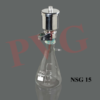
FILTERING APPARATUS WITT’S

  • Cat.No. Description 15.01 Syringe Filter Holder for 13 mm. membrane 15.02 Syringe Filter Holder for 25 mm. membrane 15.03 Vacuum Filter Holder for 47 mm. w/o Flask 15.04 3 Branch Sterility Test, for 47 mm. membrane 15.05 6 Branch Sterility Test, for 47 mm. membrane

SKU: NSG-16   Categories: Laboratory Glassware, Sintered Glasswae
  • Cat.No. Description 15.01 Syringe Filter Holder for 13 mm. membrane 15.02 Syringe Filter Holder for 25 mm. membrane 15.03 Vacuum Filter Holder for 47 mm. w/o Flask 15.04 3 Branch Sterility Test, for 47 mm. membrane 15.05 6 Branch Sterility Test, for 47 mm. membrane
Categories
  • Chemistry - General & Chemical Laboratory Apparatus
  • Laboratory Glassware
    • Distillation Assembly & Rotary Evaporators
    • Laboratory Glassware section -1
    • Interchangeable Laboratory Glassware
    • Organic Chemistry Set
    • Clevenger, Dean & Stark
    • Chromatography Columns & Gas Analysis
    • Clinical Laboratoy Glassware
    • Dairy & Milk Testing
    • Hydrometers
    • Thermometers
    • Quartz Glassware
    • Sintered Glasswae
    • Reaction Vesssel
    • Volumetric Glasswares
  • Anatomical Models
  • Biological Apparatus & Material
  • Microscopes & Accessories
  • Physics & Electronic Laboratory Apparatus
  • Pharmacy Apparatus
  • Earth Sciences
  • Plasticware
  • Uncategories
  • Agriculture Equipment
  • Surgical Instruments & Hospital Equipment
  • Chemicals
  • Material Testing
Recently Viewed
  • 1. Description and Features The NVG-40 measuring cylinder with spout is designed for accurate liquid measurement, specifically catering to experiments and procedures that require precision. These cylinders have a series of distinct features that make them suitable for a wide range of uses: Capacity and Calibration: These measuring cylinders come in various capacities, from as small as 10 ml up to 2 liters or more, depending on user requirements. Each cylinder is calibrated for accuracy, generally according to industry standards, with clear, permanent graduations that allow easy reading. Graduations are marked in both milliliters (ml) and liters (L), allowing for convenient measurement of volumes. Design: Spout: A major distinguishing feature of NVG-40 cylinders is the spout, which allows for controlled and precise pouring of liquids. This helps in preventing spills, reducing waste, and ensuring accurate transfers of liquids. Hexagonal Base: Many NVG-40 measuring cylinders are equipped with a hexagonal base, providing stability and preventing them from easily tipping over during use. This stability is particularly important when working with volatile or hazardous chemicals. Graduation Lines: The graduations are evenly spaced, with clear numerical labels to enable accurate measurements. Typically, the markings are printed in contrasting colors to enhance visibility, even for small amounts of liquid. Material: The NVG-40 measuring cylinders are made from either borosilicate glass or polypropylene (PP) plastic. Borosilicate glass is heat-resistant and chemically inert, making it suitable for working with various reagents, including acidic or basic solutions. Polypropylene plastic is lightweight, resistant to breakage, and compatible with a range of chemicals, but it is less heat-resistant compared to borosilicate glass. Ergonomic Design: The spout and the cylinder are designed to minimize dripping, allowing easy, mess-free pouring. The presence of a thumb rest on some versions ensures that users have a good grip, making them ideal for controlled operations even when one hand is used. Tolerance and Accuracy: The accuracy of these measuring cylinders is defined by their tolerance, which is the allowable range of error in measurements. Generally, the tolerance level meets ISO or ASTM standards, depending on the specific cylinder type. 2. Uses and Applications NVG-40 measuring cylinders with spout are used extensively in both educational and professional laboratories due to their versatility. Below are some of the key applications: Laboratory Use: NVG-40 measuring cylinders are a fundamental part of any laboratory setup, primarily used for measuring liquids with precision. They are widely used in titration processes, where precise volumes of a solution must be added in controlled increments. They can also be employed in preparing solutions by mixing different chemicals, where maintaining an accurate ratio is essential. Industry Use: In the pharmaceutical industry, these measuring cylinders are used for formulation, dilution, and preparation of solutions for further processing. Chemical industries employ measuring cylinders to test the quality of raw materials, create sample mixtures, and for research and development purposes. Educational and Research Institutions: NVG-40 measuring cylinders with spouts are ideal for educational institutions, where students can learn the basics of measurement in chemistry and physics experiments. They are also used in research laboratories for a variety of experiments, ranging from biological assays to materials research. Food and Beverage Industry: Measuring precise volumes is key in the food and beverage industry. These cylinders help in quality control, ensuring that ingredients are added in the correct proportions, and in analyzing products. Environmental and Water Analysis: NVG-40 cylinders are also used in environmental labs, for example, to measure water samples to determine the concentration of contaminants or to perform other tests on wastewater or effluents. 3. Material Properties The choice between borosilicate glass and polypropylene largely depends on the intended use: Borosilicate Glass: Heat Resistance: Borosilicate glass has a very low coefficient of thermal expansion, making it resistant to temperature changes. It can be autoclaved and used for hot liquids. Chemical Compatibility: Borosilicate is resistant to most chemicals, except for hydrofluoric acid. This makes it ideal for work involving reactive chemicals. Transparency: It offers a clear view of the liquid being measured, allowing easy monitoring of the meniscus to read volumes accurately. Polypropylene Plastic (PP): Durability: Polypropylene is highly resistant to breaking and is more durable than glass, which is especially useful for fieldwork or situations where equipment could be dropped. Chemical Resistance: It is resistant to various chemicals, though not suitable for strong acids or bases. Cost: Polypropylene is generally less expensive than borosilicate, making it a cost-effective option for large-volume use or where breakage is a concern. 4. Maintenance and Care To ensure the longevity and accuracy of NVG-40 measuring cylinders, proper care and maintenance are required: Cleaning: Always clean the measuring cylinder after each use. Borosilicate glass cylinders can be washed with laboratory-grade detergents, while polypropylene cylinders should be rinsed with lukewarm water to avoid deformation. It is important to ensure that no chemical residues are left, as they can interfere with future measurements. Handling: Avoid sudden temperature changes with borosilicate glass cylinders, as this can lead to cracking. Ensure the measuring cylinder is placed on a flat, stable surface to prevent tipping over. The hexagonal base design provides additional stability. Storage: Store the measuring cylinders in a dry environment to prevent the buildup of residue or the potential for breakage. Glass cylinders should be stored separately or with padding to avoid contact with other glassware, which could cause damage. 5. Advantages and Limitations Advantages: The spout design allows for easy pouring without spills, making it ideal for applications that require precision. The clear graduation markings provide easy volume measurement, ensuring reproducibility in experiments. Both glass and polypropylene versions offer versatility, catering to the varying needs of different types of laboratories. Limitations: Glass cylinders are prone to breakage and may not be ideal in environments where robust handling is required. Plastic cylinders are more prone to scratching, which can make reading the graduations difficult over time. There is a limited range of volume when compared to other volumetric devices like burettes or pipettes, making it less suitable for extremely precise measurements. NVG-40 MEASURING CYLINDERS WITH SPOUT
  • MOLECULE MODEL SET WATER PM-550D MOLECULE MODEL SET WATER
  • Reviews (0)

Reviews

There are no reviews yet.

Be the first to review “FILTERING APPARATUS WITT’S” Cancel reply

Related products

FUNNEL FILTERATION HOLDER, FOR MICRO ANALYSIS
Add to wishlist
Quick View

Laboratory Glassware

FUNNEL FILTERATION HOLDER, FOR MICRO ANALYSIS

Cat.No. Centre  Parallel  Joint Side 5°  Side 10° Side 15° 106.01  19/24  19/24 24/29  19/24  ----- 106.02 24/29  19/24 24/29  19/24  ----- 106.03 24/29 24/29 24/29 24/29  ----- 106.04  19/24 14/23 14/23 14/23 29/32 106.05 24/29 14/23 14/23  19/24 29/32 106.06 34/35  19/24 24/29 24/29 29/32
Add to wishlist
Quick View

Laboratory Glassware

LIDS FOR  REACTION FLASKS , FLAT FLANGE AND INTERCHANGEABLE JOINT I. D. 100 MM., O.D. 150 MM.

Cat.No. Dia. of Disc. mm. Porosity Grade 8.01 15 G1 8.02 15 G2 8.03 15 G3 8.04 15 G4 8.05 20 G1 8.06 20 G2 8.07 20 G3 8.08 20 G4
Add to wishlist
Quick View

Laboratory Glassware

SINTERED GLASS GAS DISTRIBUTION TUBE (FILTER STIC)

NSG- 9 SALT BRIDGE WITH SINTERED DISC A salt bridge is a device used in an electrochemical cell for connecting its oxidation and reduction half cells wherein a weak electrolyte is used. In other words, a salt bridge is a junction that connects the anodic and cathodic compartments in a cell or electrolytic solution. Glass tube salt bridges commonly consist of U-shaped  tubes filled with a relatively inert electrolyte. A salt bridge is an important part of an electrochemical cell. A salt bridge is a glass tube  that connects the two sides of a an electrochemical cell and provides electrolytes needed to neutralize the solutions in both sides of the cell. Purpose of Salt Bridge The function of a salt bridge in electrochemical cell is to keep electrical neutrality in the solutions by providing an electrical contact between both sides of the galvanic cell without any mixing of the solutions. Without a salt bridge, negative charge will collect into just one side of the electrochemical cell and the other side will be positively charged as ions are created and become part of each sides solution. If both sides of the cell become polarized in charge then the electrical current will not be produced. The purpose of salt bridge is to continue the reaction that produces the electrical current, without it charge would polarize and electrical current would cease. Essentially the purpose of a salt bridge would be maintain neutrality of charge between the two sides of an electrochemical cell so that electric current can continue to be produced. Construction : Apparatus consist of Inverted Glass U tube,With over all  height 100 mm ends closed with Sintered Disc . Width 80 mm.Diameter of arms.13 mm Material : Chemical resistant clear Borosilicate 3.3 glass and Sintered Disc
Add to wishlist
Quick View

Laboratory Glassware

SALT BRIDGE WITH SINTERD DISC

For holding flat flange joint of 100 mm. Flanges
Add to wishlist
Quick View

Laboratory Glassware

FLASK  CLIP

FILTER APPARATUS COMPLETE WITH FILTERING FLASK, GOOCH CRUCIBLE, WITH SINTERED DISC OF POROSITY G-1,G-2,G-3 OR G4, GLASS ADAPTER AND RUBBER CONE
Add to wishlist
Quick View

Laboratory Glassware

FILTER APPARATUS COMPLETE WITH FILTERING FLASK, GOOCH CRUCIBLE, WITH SINTERED DISC OF POROSITY G-1,G-2,G-3 OR G4, GLASS ADAPTER AND RUBBER CONE

LID ADAPTORS WITH FOUR NECK
Add to wishlist
Quick View

Laboratory Glassware

LID ADAPTORS WITH FOUR NECK

Please mention porosity of disc while ordering Cat.No. Flask Capacity ml. Crucible Capacity ml. 14.01 250 80 14.02 500 200 14.03 1000 500 14.04 2000 1000
Add to wishlist
Quick View

Laboratory Glassware

FILTER APPARATUS COMPLETE WITH FILTER FLASK WITH SOCKET & BUCHNER FUNNEL WITH SINTERED DISC POROSITY G-1,G-2,G-3 OR G-4 HAVING CONE

  • Home
  • About Us
  • Certifications
  • Products
  • Contact
  • Blog

Address Details

PVG International
# 6 - C, New Ram Nagar, Ambala Cantt - 133 001, Haryana, India.
# P.O. Box-113

Our Visitor

016329

Contact Details

  • info@pvginternationals.com
  • info@narayanienterprises.com
  • +91-9466446612
  • +91-9728497962
  • Phone: +91-171-2651006, 2653272
  • Fax: +91-171-2653259
Copyright 2026 © PVG INTERNATIONAL
  • Home
  • About Us
  • Certifications
  • Products
  • Contact
  • Blog
  • Login
    • Mobile: +91-9466446612 +91-9728497962
    • E-Mail: info@pvginternationals.com info@narayanienterprises.com

Login

captcha

Lost your password?

Register

Your personal data will be used to support your experience throughout this website, to manage access to your account, and for other purposes described in our privacy policy.

captcha