Skip to content
PVG INTERNATIONALPVG INTERNATIONAL
    • Mobile: +91-9466446612 +91-9728497962
    • E-Mail: info@pvginternationals.com info@narayanienterprises.com
  • Cart

    No products in the cart.

  • Home
  • About Us
  • Certifications
  • Products
  • Contact
  • Blog
Add to wishlist
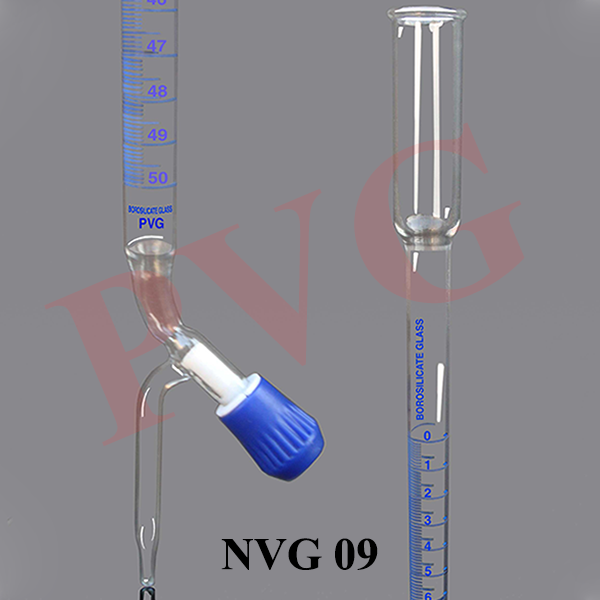
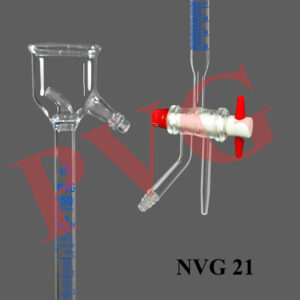
Details same  as above NVG - 07, but with funnel cup top.
Home / Laboratory Glassware / Volumetric Glasswares

BURETTES, SCREW TYPE ROTAFLOW STOPCOCK WITH FUNNEL TOP

  • Design and Features The NVG-10 burette is a high-quality, precision instrument made from borosilicate glass, which is highly resistant to thermal shock and chemical corrosion. The burette has a long cylindrical body, marked with graduations along its length to allow precise readings of the liquid volume being dispensed. The graduations are often printed with high-contrast ink, which makes reading measurements easy and minimizes the risk of parallax errors. The distinguishing feature of this burette is its straight bore stopcock made from PTFE (Polytetrafluoroethylene), commonly known by the brand name Teflon. PTFE is well known for its excellent chemical resistance, non-stick properties, and high tolerance to temperature variations. This makes the NVG-10 burette ideal for use with a wide range of reagents, including acidic, basic, and organic solutions, as PTFE is virtually inert to most chemicals found in laboratory settings. The straight bore design of the stopcock allows the liquid to flow smoothly through the valve, reducing the potential for blockages or irregularities in dispensing. The stopcock can be easily rotated to control the flow rate of the liquid being dispensed, allowing for fine control during titrations. The PTFE stopcock is also leak-proof, providing confidence in accuracy and ensuring no loss of solution during use. Uses and Applications The NVG-10 burette with a PTFE key stopcock is primarily used for volumetric analysis, particularly in titration experiments. Titration is a common analytical procedure used to determine the concentration of a solution by reacting it with a solution of known concentration, called a titrant. The burette’s accuracy and easy control make it essential for various laboratory applications, including: Acid-Base Titrations: Acid-base titrations are among the most common uses of the NVG-10 burette. In these experiments, the burette is used to accurately dispense an acid or base solution into a flask containing the analyte and an indicator. The precise control offered by the PTFE stopcock allows the titrant to be added dropwise as the endpoint is approached, ensuring the reaction is stopped at the exact point where neutralization occurs. Redox Titrations: Redox titrations involve the transfer of electrons between reactants and are used to determine the concentration of oxidizing or reducing agents in a solution. The NVG-10 burette is particularly suitable for dispensing the titrant in redox reactions, where precise volume control is necessary to accurately determine the equivalence point. Complexometric Titrations: In complexometric titrations, a chelating agent, such as EDTA, is used to form a complex with metal ions. The NVG-10 burette is used to dispense the chelating agent while monitoring the formation of the complex, typically with the use of an appropriate indicator. The accuracy of the NVG-10 ensures that even trace concentrations of metal ions can be accurately determined. Quality Control in Industrial and Research Settings: Industries such as pharmaceuticals, food and beverage production, and water treatment often rely on titration for quality control and product analysis. The NVG-10 burette is ideal for these settings, providing the precision needed to ensure that products meet stringent quality and safety standards. Advantages of PTFE (Teflon) Key Stopcock The PTFE key stopcock is a critical feature of the NVG-10 burette that provides several advantages: Chemical Resistance: PTFE is highly resistant to a wide range of chemicals, including strong acids, alkalis, and organic solvents. This ensures that the stopcock remains unaffected by the chemical reagents being dispensed, reducing the risk of degradation or contamination. This chemical resistance makes the NVG-10 burette versatile and suitable for use with a wide range of reagents. Smooth and Reliable Flow Control: The straight bore design of the PTFE stopcock ensures a smooth, unrestricted flow of liquid. The non-stick properties of PTFE minimize friction, allowing for easy and precise adjustments to the flow rate, which is essential during titration. This smooth control is particularly useful when approaching the endpoint, where dropwise addition of the titrant is required. Leak-Proof Operation: The PTFE stopcock is designed to provide a secure, leak-proof seal. This prevents loss of the titrant and ensures the accuracy of the titration process. The tight seal also minimizes the risk of contamination by preventing external substances from entering the burette. Ease of Cleaning and Maintenance: PTFE is easy to clean due to its non-stick properties. Residues from previous experiments do not adhere to the PTFE surface, making it easy to rinse and clean the stopcock between uses. This feature helps to maintain the accuracy and reliability of the burette over time. Calibration and Accuracy The NVG-10 burette is calibrated to ensure high accuracy, which is crucial for titrations and other volumetric analyses. The graduations are marked clearly, allowing the user to accurately measure the volume of the dispensed liquid. The accuracy of the burette is often expressed as a percentage of the total volume, and the NVG-10 burette typically meets or exceeds the standards required for Class A accuracy. This level of precision is vital in quantitative analyses where even a slight deviation in volume could lead to incorrect results. Handling and Maintenance Proper handling and maintenance of the NVG-10 burette are crucial to ensuring its longevity and accuracy: Cleaning: After each use, the burette should be thoroughly cleaned to prevent any residues from affecting future titrations. The PTFE stopcock can be easily removed and cleaned separately to ensure that no chemicals are left inside the bore. For cleaning, the burette should be rinsed with deionized water, followed by the solvent appropriate to the reagents used. Storage: The burette should be stored in an upright position to prevent the stopcock from becoming damaged or blocked. It is also essential to keep the stopcock open when not in use to avoid unnecessary stress on the sealing surfaces. Calibration Check: Regular calibration checks are recommended to ensure that the burette maintains its accuracy. Calibration should be done periodically or if the burette is suspected to be inaccurate.
  • Same as above but in Amber color.

Details same  as above NVG – 07, but with funnel cup top.

SKU: NVG-09 Category: Volumetric Glasswares
  • Design and Features The NVG-10 burette is a high-quality, precision instrument made from borosilicate glass, which is highly resistant to thermal shock and chemical corrosion. The burette has a long cylindrical body, marked with graduations along its length to allow precise readings of the liquid volume being dispensed. The graduations are often printed with high-contrast ink, which makes reading measurements easy and minimizes the risk of parallax errors. The distinguishing feature of this burette is its straight bore stopcock made from PTFE (Polytetrafluoroethylene), commonly known by the brand name Teflon. PTFE is well known for its excellent chemical resistance, non-stick properties, and high tolerance to temperature variations. This makes the NVG-10 burette ideal for use with a wide range of reagents, including acidic, basic, and organic solutions, as PTFE is virtually inert to most chemicals found in laboratory settings. The straight bore design of the stopcock allows the liquid to flow smoothly through the valve, reducing the potential for blockages or irregularities in dispensing. The stopcock can be easily rotated to control the flow rate of the liquid being dispensed, allowing for fine control during titrations. The PTFE stopcock is also leak-proof, providing confidence in accuracy and ensuring no loss of solution during use. Uses and Applications The NVG-10 burette with a PTFE key stopcock is primarily used for volumetric analysis, particularly in titration experiments. Titration is a common analytical procedure used to determine the concentration of a solution by reacting it with a solution of known concentration, called a titrant. The burette’s accuracy and easy control make it essential for various laboratory applications, including: Acid-Base Titrations: Acid-base titrations are among the most common uses of the NVG-10 burette. In these experiments, the burette is used to accurately dispense an acid or base solution into a flask containing the analyte and an indicator. The precise control offered by the PTFE stopcock allows the titrant to be added dropwise as the endpoint is approached, ensuring the reaction is stopped at the exact point where neutralization occurs. Redox Titrations: Redox titrations involve the transfer of electrons between reactants and are used to determine the concentration of oxidizing or reducing agents in a solution. The NVG-10 burette is particularly suitable for dispensing the titrant in redox reactions, where precise volume control is necessary to accurately determine the equivalence point. Complexometric Titrations: In complexometric titrations, a chelating agent, such as EDTA, is used to form a complex with metal ions. The NVG-10 burette is used to dispense the chelating agent while monitoring the formation of the complex, typically with the use of an appropriate indicator. The accuracy of the NVG-10 ensures that even trace concentrations of metal ions can be accurately determined. Quality Control in Industrial and Research Settings: Industries such as pharmaceuticals, food and beverage production, and water treatment often rely on titration for quality control and product analysis. The NVG-10 burette is ideal for these settings, providing the precision needed to ensure that products meet stringent quality and safety standards. Advantages of PTFE (Teflon) Key Stopcock The PTFE key stopcock is a critical feature of the NVG-10 burette that provides several advantages: Chemical Resistance: PTFE is highly resistant to a wide range of chemicals, including strong acids, alkalis, and organic solvents. This ensures that the stopcock remains unaffected by the chemical reagents being dispensed, reducing the risk of degradation or contamination. This chemical resistance makes the NVG-10 burette versatile and suitable for use with a wide range of reagents. Smooth and Reliable Flow Control: The straight bore design of the PTFE stopcock ensures a smooth, unrestricted flow of liquid. The non-stick properties of PTFE minimize friction, allowing for easy and precise adjustments to the flow rate, which is essential during titration. This smooth control is particularly useful when approaching the endpoint, where dropwise addition of the titrant is required. Leak-Proof Operation: The PTFE stopcock is designed to provide a secure, leak-proof seal. This prevents loss of the titrant and ensures the accuracy of the titration process. The tight seal also minimizes the risk of contamination by preventing external substances from entering the burette. Ease of Cleaning and Maintenance: PTFE is easy to clean due to its non-stick properties. Residues from previous experiments do not adhere to the PTFE surface, making it easy to rinse and clean the stopcock between uses. This feature helps to maintain the accuracy and reliability of the burette over time. Calibration and Accuracy The NVG-10 burette is calibrated to ensure high accuracy, which is crucial for titrations and other volumetric analyses. The graduations are marked clearly, allowing the user to accurately measure the volume of the dispensed liquid. The accuracy of the burette is often expressed as a percentage of the total volume, and the NVG-10 burette typically meets or exceeds the standards required for Class A accuracy. This level of precision is vital in quantitative analyses where even a slight deviation in volume could lead to incorrect results. Handling and Maintenance Proper handling and maintenance of the NVG-10 burette are crucial to ensuring its longevity and accuracy: Cleaning: After each use, the burette should be thoroughly cleaned to prevent any residues from affecting future titrations. The PTFE stopcock can be easily removed and cleaned separately to ensure that no chemicals are left inside the bore. For cleaning, the burette should be rinsed with deionized water, followed by the solvent appropriate to the reagents used. Storage: The burette should be stored in an upright position to prevent the stopcock from becoming damaged or blocked. It is also essential to keep the stopcock open when not in use to avoid unnecessary stress on the sealing surfaces. Calibration Check: Regular calibration checks are recommended to ensure that the burette maintains its accuracy. Calibration should be done periodically or if the burette is suspected to be inaccurate.
  • Same as above but in Amber color.
Categories
  • Chemistry - General & Chemical Laboratory Apparatus
  • Laboratory Glassware
    • Distillation Assembly & Rotary Evaporators
    • Laboratory Glassware section -1
    • Interchangeable Laboratory Glassware
    • Organic Chemistry Set
    • Clevenger, Dean & Stark
    • Chromatography Columns & Gas Analysis
    • Clinical Laboratoy Glassware
    • Dairy & Milk Testing
    • Hydrometers
    • Thermometers
    • Quartz Glassware
    • Sintered Glasswae
    • Reaction Vesssel
    • Volumetric Glasswares
  • Anatomical Models
  • Biological Apparatus & Material
  • Microscopes & Accessories
  • Physics & Electronic Laboratory Apparatus
  • Pharmacy Apparatus
  • Earth Sciences
  • Plasticware
  • Uncategories
  • Agriculture Equipment
  • Surgical Instruments & Hospital Equipment
  • Chemicals
  • Material Testing
Recently Viewed
  • BURETTES WITH STRAIGHT BORE PTFE (TEFLON) KEY STOPCOCK BURETTES WITH STRAIGHT BORE PTFE (TEFLON) KEY STOPCOCK
  • MODEL OF PLANT CELL Enlarged Anatomical model as seen under the Electron Microscope mounted on base board with key card. All the Parts i.e Nucleus, Vacuoles Cell membrane, Endoplasmic Reticulum, Mitochondrion. Golgi apparatus, Chloroplast are detailed in this model and numbered too. Functions of all parts can be detailed easily by this Model e.g Chloroplast which makes plants green and is for Photosynthesis i.e take sunlight and use it to turn water and carbon dioxide into food through a process called photosynthesis. A plant cell is a tiny building block that makes up all parts of a plant, just like how a brick is used to build a house. Each plant is made up of millions of these cells, and each cell has special parts that help it do its job. Thick outer layer called the cell wall is shown, which gives them strength and helps them keep their shape. Inside the plant cell, is a  a jelly-like substance called cytoplasm, which holds all the important parts, or organelles, that help the cell work properly. This is how plants make their own food and release oxygen into the air, which is great for us to breathe! Another important part of the plant cell is Nucleus the centre point of any plant cellThe cell vacuole, which is like a big storage bag. It holds water, nutrients, and waste products. The vacuole is usually much larger in plant cells compared to animal cells, and it helps keep the plant firm and strong by maintaining pressure. All these parts work together to help the plant grow, heal, and produce flowers, fruits, and seeds. So, plant cells are really amazing little structures! They work hard every day to help the plant stay healthy and grow tall. Understanding how plant cells function helps us appreciate the important role that plants play in our world, from providing food to giving us clean air. Students when see any plant, can understand about all the small cells inside it working together to keep it alive! YM-177 3D MODEL OF PLANT CELL
  • With overflow cup. Cat. No. Capacity ml. 77.01 5 77.02 10 77.03 20 77.04 25 77.05 50 77.06 100 AUTOMATIC PIPETTES
  • Reviews (0)

Reviews

There are no reviews yet.

Be the first to review “BURETTES, SCREW TYPE ROTAFLOW STOPCOCK WITH FUNNEL TOP” Cancel reply

Related products

BURETTES WITH OVER FLOW CUP, AUTOMATIC ZERO DOUBLE OBLIQUE BORE PTFE (TEFLON) KEY STOPCOCK, 3- WAY
Add to wishlist
Quick View

Volumetric Glasswares

BURETTES WITH OVER FLOW CUP, AUTOMATIC ZERO DOUBLE OBLIQUE BORE PTFE (TEFLON) KEY STOPCOCK, 3- WAY

Accuracy as per Class ‘A’.
Add to wishlist
Quick View

Volumetric Glasswares

BURETTES WITH MICRO AUTOMATIC FILLING DEVICE WITH RESERVOIR

BURETTES WITH STRAIGHT BORE PTFE (TEFLON) KEY STOPCOCK
Add to wishlist
Quick View

Volumetric Glasswares

BURETTES WITH STRAIGHT BORE PTFE (TEFLON) KEY STOPCOCK

Accuracy as per Class ‘A’. Cat. No. Capacity ml. Subdivision ml. Tolerance ± ml. 24.01 10 0.05 0.02 24.02 25 0.10 0.05 24.03 50 0.10 0.05 24.04 100 0.20 0.10
Add to wishlist
Quick View

Volumetric Glasswares

BURETTES WITH OVER FLOW CUP, AUTOMATIC ZERO, DOUBLE BORE, SCREW TYPE ROTAFLOW STOPCOCK 3 – WAY

Accuracy as per Class ‘B’. Cat. No. Capacity ml. Subdivision ml. Tolerance ± ml. 17.01 10 0.05 0.05 17.02 25 0.05 0.05 17.03 50 0.10 0.10 17.04 100 0.20 0.20  
Add to wishlist
Quick View

Volumetric Glasswares

BURETTES WITH DOUBLE BORE SCREW TYPE ROTAFLOW STOPCOCK WITH PTFE (TEFLON) KEYS
Accuracy as per Class ‘A’. Cat. No. Capacity ml. Subdivision ml. Tolerance ± ml. 21.01 10 0.05 0.02 21.02 25 0.10 0.05 21.03 50 0.10 0.05 21.04 100 0.20 0.10
Add to wishlist
Quick View

Volumetric Glasswares

BURETTES WITH OVER FLOW CUP, AUTOMATIC ZERO, DOUBLE OBLIQUE BORE GLASS STOPCOCK, 3- WAY

BURETTES WITH SINGLE STRAIGHT BORE GLASS KEY STOPCOCK
Add to wishlist
Quick View

Volumetric Glasswares

BURETTES WITH SINGLE STRAIGHT BORE GLASS KEY STOPCOCK

Accuracy as per Class ‘A’. Cat. No. Capacity ml. Subdivision ml. Tolerance ± ml. 27.01 10 0.05 0.02 27.02 25 0.1 0.05 27.03 50 0.1 0.05 27.04 100 0.2 0.1
Add to wishlist
Quick View

Volumetric Glasswares

BURETTES WITH OVER FLOW CUP, AUTOMATIC ZERO DOUBLE OBLIQUE BORE PTFE (TEFLON) KEY STOPCOCK, 3- WAY

  • Home
  • About Us
  • Certifications
  • Products
  • Contact
  • Blog

Address Details

PVG International
# 6 - C, New Ram Nagar, Ambala Cantt - 133 001, Haryana, India.
# P.O. Box-113

Our Visitor

242855

Contact Details

  • info@pvginternationals.com
  • info@narayanienterprises.com
  • +91-9466446612
  • +91-9728497962
  • Phone: +91-171-2651006, 2653272
  • Fax: +91-171-2653259
Copyright 2026 © PVG INTERNATIONAL
  • Home
  • About Us
  • Certifications
  • Products
  • Contact
  • Blog
  • Login
    • Mobile: +91-9466446612 +91-9728497962
    • E-Mail: info@pvginternationals.com info@narayanienterprises.com

Login

captcha

Lost your password?

Register

Your personal data will be used to support your experience throughout this website, to manage access to your account, and for other purposes described in our privacy policy.

captcha