Skip to content
PVG INTERNATIONALPVG INTERNATIONAL
    • Mobile: +91-9466446612 +91-9728497962
    • E-Mail: info@pvginternationals.com info@narayanienterprises.com
  • Cart

    No products in the cart.

  • Home
  • About Us
  • Certifications
  • Products
  • Contact
  • Blog
Add to wishlist
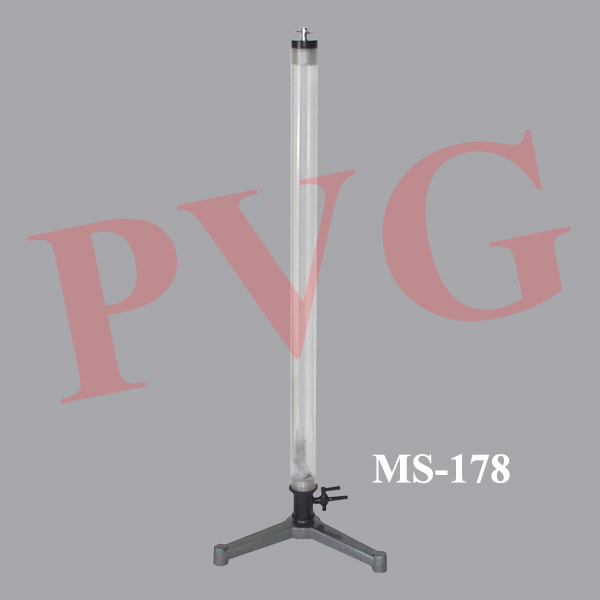
Demonstrate that objects in a vacuum fall at identical speeds regardless of their weight. Consists of a break-resistant acrylic tube 26” long and 1.5” diameter, expansion plugs, metal disc, feather, stopcock for vacuum connection, and a tripod base.
Home / Physics & Electronic Laboratory Apparatus

MS-178 PVG FREE FALL APPARATUS

  • Comprising two glass tubes 225 x 8 mm. length x bore, one closed at the top other open, connected by means of rubber pressure tubing of 1 m. length 10 mm. outside diameter x 5 mm. bore, both mounted on the adjustable sliding metal brackets which can be locked in any position on the support rods fixed on the heavy stable iron base. Polished wooden stand 1.05 m. high, carries a wooden scale graduated 0-100 cm. with millimeter divisions in the centre and figured every 1 cm. up either side. Supplied without mercury. l Also available with wooden base in the shape of trough
  • To demonstrate that in the absence of atmospheric pull, bodies of different masses and density fall through a given distance in the same time. Comprises a borosilicate glass tube of size 600 x 25 mm, fitted with rubber bung at both the ends, one solid and other with a hole to carry a brass tube and 6 mm diameter rubber tubing for connection to a vacuum pump. A Hoffman clipis used on pressure rubber tubing. Inside the tube is a guinea generally a small coin and a feather. In air, the guinea and the feather fall at different speeds due to air resistance. To show this, turn the tube upside down so both items fall from one end of the tube to the other. The guinea will fall much faster than the feather because it is affected less by air resistance. (The feather has a greater surface area which comes in contact with the surrounding air). Turn the vacuum pump on and expel as much air from the tube as is safely possible. When you have done this, tighten the Hoffman clip and turn off the pump. Inside the tube you should now have a near vacuum. Turn the tube upside down once again and you will see that the guinea and feather arrive at the other end at the same time. With no air in the tube, both objects fall at the same speed as there is no air present (therefore no or negligible resistance) to affect their descent.

Demonstrate that objects in a vacuum fall at identical speeds
regardless of their weight. Consists of a break-resistant acrylic tube
26” long and 1.5” diameter, expansion plugs, metal disc, feather,
stopcock for vacuum connection, and a tripod base.

SKU: MS-178 FREE FALL APPARATUS Category: Physics & Electronic Laboratory Apparatus
  • Comprising two glass tubes 225 x 8 mm. length x bore, one closed at the top other open, connected by means of rubber pressure tubing of 1 m. length 10 mm. outside diameter x 5 mm. bore, both mounted on the adjustable sliding metal brackets which can be locked in any position on the support rods fixed on the heavy stable iron base. Polished wooden stand 1.05 m. high, carries a wooden scale graduated 0-100 cm. with millimeter divisions in the centre and figured every 1 cm. up either side. Supplied without mercury. l Also available with wooden base in the shape of trough
  • To demonstrate that in the absence of atmospheric pull, bodies of different masses and density fall through a given distance in the same time. Comprises a borosilicate glass tube of size 600 x 25 mm, fitted with rubber bung at both the ends, one solid and other with a hole to carry a brass tube and 6 mm diameter rubber tubing for connection to a vacuum pump. A Hoffman clipis used on pressure rubber tubing. Inside the tube is a guinea generally a small coin and a feather. In air, the guinea and the feather fall at different speeds due to air resistance. To show this, turn the tube upside down so both items fall from one end of the tube to the other. The guinea will fall much faster than the feather because it is affected less by air resistance. (The feather has a greater surface area which comes in contact with the surrounding air). Turn the vacuum pump on and expel as much air from the tube as is safely possible. When you have done this, tighten the Hoffman clip and turn off the pump. Inside the tube you should now have a near vacuum. Turn the tube upside down once again and you will see that the guinea and feather arrive at the other end at the same time. With no air in the tube, both objects fall at the same speed as there is no air present (therefore no or negligible resistance) to affect their descent.
Categories
  • Chemistry - General & Chemical Laboratory Apparatus
  • Laboratory Glassware
    • Distillation Assembly & Rotary Evaporators
    • Laboratory Glassware section -1
    • Interchangeable Laboratory Glassware
    • Organic Chemistry Set
    • Clevenger, Dean & Stark
    • Chromatography Columns & Gas Analysis
    • Clinical Laboratoy Glassware
    • Dairy & Milk Testing
    • Hydrometers
    • Thermometers
    • Quartz Glassware
    • Sintered Glasswae
    • Reaction Vesssel
    • Volumetric Glasswares
  • Anatomical Models
  • Biological Apparatus & Material
  • Microscopes & Accessories
  • Physics & Electronic Laboratory Apparatus

  • Pharmacy Apparatus
  • Earth Sciences
  • Plasticware
  • Uncategories
  • Agriculture Equipment
  • Surgical Instruments & Hospital Equipment
  • Chemicals
  • Material Testing
Recently Viewed
  • Demonstrate that objects in a vacuum fall at identical speeds regardless of their weight. Consists of a break-resistant acrylic tube 26” long and 1.5” diameter, expansion plugs, metal disc, feather, stopcock for vacuum connection, and a tripod base. MS-178 PVG FREE FALL APPARATUS
  • KINETIC THEORY This PVG’S Kinetic Theory Model in Physics allows differentaspects of the kinetic theory of gases to be simulated effectively. Kinetic Motion of Gas molecules,to simulatethe behaviour of a gas as its molecules gain energy. Browninan motion is simulated by foamed polystyrene spheres among the moleculaes of Gas. Atmospheric rarefaction can be seen in this practical by this Model. Boyles Law is by spheres and Piston i.e to show that greater pressure exerted by the large number of spheresand by reduction in volume. Apparatus comprises a Round acrylic tube, fitted at upper end with loose fitting metal cap, tube with phosphor bronze spheres and an agitating piston, with metal base which houses vibrating motor. MS-189 PVG KINETIC THEORY MODEL
  • To determine the coefficient of expansion for a variety of metals. This model is with high contrast numerals and heat shield between the tube and base to ensure accurate readings by dial gauze. Supplied complete with four expansion rods of steel, brass, aluminium and copper MS-195 PVG LINEAR EXPANSION APPARATUS PRECISION
  • Reviews (0)

Reviews

There are no reviews yet.

Be the first to review “MS-178 PVG FREE FALL APPARATUS” Cancel reply

Related products

Placeholder
Add to wishlist
Quick View

Physics & Electronic Laboratory Apparatus
MS-17 PVG ROLLER

Placeholder
Add to wishlist
Quick View

Physics & Electronic Laboratory Apparatus

MS-10 PVG RODS

Placeholder
Add to wishlist
Quick View

Physics & Electronic Laboratory Apparatus

MS-25 PVG FRICTION BOARD

Placeholder
Add to wishlist
Quick View

Physics & Electronic Laboratory Apparatus

MS-06 PVG CYLINDERS METAL

MS-28 PVG AXLE
Add to wishlist
Quick View

Physics & Electronic Laboratory Apparatus

MS-28 PVG AXLE

Side 10, 20, 25 mm.
Add to wishlist
Quick View

Physics & Electronic Laboratory Apparatus

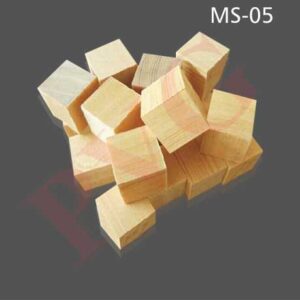
MS-05 PVG CUBE SET, WOODEN

Cat. No. Diameter mm. 07.01 3 07.02 6 07.03 9 07.04 12 07.05 16 07.06 19 07.07 25
Add to wishlist
Quick View

Physics & Electronic Laboratory Apparatus

MS-07 PVG SPHERES STEEL

Set of six, comprising one each of Aluminium, Iron, Copper, Brass, Lead and Zinc. Cat. No. Size mm. 4.01 10 4.02 20 4.03 25
Add to wishlist
Quick View

Physics & Electronic Laboratory Apparatus

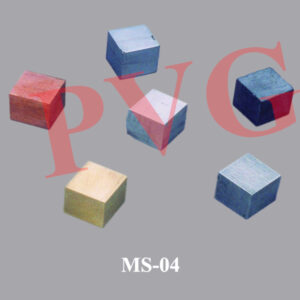
MS-04 PVG CUBE METAL SET

  • Home
  • About Us
  • Certifications
  • Products
  • Contact
  • Blog

Address Details

PVG International
# 6 - C, New Ram Nagar, Ambala Cantt - 133 001, Haryana, India.
# P.O. Box-113

Our Visitor

081204

Contact Details

  • info@pvginternationals.com
  • info@narayanienterprises.com
  • +91-9466446612
  • +91-9728497962
  • Phone: +91-171-2651006, 2653272
  • Fax: +91-171-2653259
Copyright 2026 © PVG INTERNATIONAL
  • Home
  • About Us
  • Certifications
  • Products
  • Contact
  • Blog
  • Login
    • Mobile: +91-9466446612 +91-9728497962
    • E-Mail: info@pvginternationals.com info@narayanienterprises.com

Login

captcha

Lost your password?

Register

Your personal data will be used to support your experience throughout this website, to manage access to your account, and for other purposes described in our privacy policy.

captcha